
Card Payment ACH Payment
Skip to main content

All About Plumbing, HVAC, Septic, and Electric

Gas Water Heater Repair vs. Replacement: What’s the Best Choice?

When your water heater stops delivering hot water, deciding between gas water heater repair and full replacement can feel overwhelming. Understanding when repair makes sense versus when replacement is the smarter investment helps you make an informed decision that protects your home and your budget.

Common Issues That Require Gas Water Heater Repair

Many water heater problems can be fixed affordably through professional services. Identifying these issues early prevents more extensive damage and keeps your system running efficiently.

Fixable Problems

Pilot light issues are among the most common reasons homeowners need gas water heater repair. A pilot light that won’t stay lit often indicates a faulty thermocouple, which is an inexpensive and straightforward fix.

Other repairable issues include:

  • Faulty gas control valve
  • Broken thermostat
  • Corroded anode rod
  • Leaking temperature and pressure relief valve
  • Sediment buildup affecting performance

According to HomeAdvisor’s 2024 Water Heater Repair Cost Guide, the average gas water heater repair costs between $150 and $600, making it significantly more affordable than replacement costs that typically exceed $1,500.

When Gas Water Heater Repair Makes Sense

If your water heater is less than 8 years old and experiencing isolated problems, having them repaired is usually the right choice. Quality units from reputable manufacturers can last 10-15 years with proper maintenance and timely repairs.

Warning Signs That Replacement Is Necessary

At some point, doing repairs isn’t enough to solve the problem. Certain conditions indicate that replacement is the more cost-effective long-term solution.

Red Flags for Replacement

Rust-colored water coming from your hot taps often signals internal tank corrosion. Once the tank itself corrodes, you cannot fix the underlying problem, and replacement becomes necessary.

Replace rather than repair when you notice:

  • Water heater age exceeding 10-12 years
  • Pooling water around the tank base
  • Inconsistent water temperatures despite repairs
  • Loud rumbling or banging noises
  • Visible rust on the tank exterior
  • Multiple repair calls within a short timeframe

The 50% Rule

Plumbing professionals often recommend the 50% rule: if gas water heater repair costs exceed 50% of replacement cost and your unit is over 8 years old, replacement provides better value.

Factors to Consider in Your Decision

Energy Efficiency Newer models offer significantly better energy efficiency than units manufactured 10+ years ago. While repairs fix immediate problems, replacement can lower your monthly utility bills substantially.

Warranty Status Check your warranty coverage before proceeding. Some costs may be covered, making repair the clear choice.

Capacity Needs If your household has grown, replacement lets you upgrade to a larger capacity unit that better serves your needs.

Professional Diagnosis Is Essential

While some homeowners attempt to do some DIY projects, working with gas appliances requires specialized knowledge and licensing. Professional plumbers identify the root cause of problems and provide honest recommendations based on your unit’s condition.

Trust All About Plumbing for Expert Service

All About Plumbing provides comprehensive water heater services throughout North Carolina. Our licensed technicians offer free inspections and honest assessments, ensuring you get the solution that best fits your needs and budget.

Contact All About Plumbing today to schedule your water heater evaluation. We’ll diagnose the problem and provide transparent pricing for both gas water heater repair and replacement options.

Water Heater Making Noise: What You Should Know


Water heater making noise refers to the popping, rumbling, crackling, screeching, or humming sounds a hot water system can produce, commonly caused by sediment buildup, expanding tank metal, loose components, or ordinary operation. Some of these noises point to problems typical of a water heater going bad, while others, such as the fan and compressor in heat pump water heaters that make some noise, are simply part of normal function. Catching the difference early guides smarter electric water heater troubleshooting and repair decisions.

Why Is Your Water Heater Making Noise?

A water heater making noise is your unit telling you something, from a harmless operational hum to an early warning of sediment buildup, pressure changes, or component wear that deserves attention. Understanding those sounds helps you protect one of your home’s hardest working appliances before a small issue turns into a cold-shower emergency.

Not every sound spells trouble, because some noise is simply part of how the equipment runs. According to ENERGY STAR guidance, a heat pump water heater produces a sound similar to a dishwasher, between 45 and 55 decibels. Popping, rumbling, or crackling from a conventional tank, on the other hand, often points to sediment collecting on the bottom, where trapped minerals let water boil and sputter against the heating surface.

Why does this matter to you? A unit forced to work through a layer of hardened sediment generally runs less efficiently, wears faster, and can quietly raise your energy costs. Left unchecked, persistent noise may foreshadow leaks, a failing heating element, or a tank nearing the end of its life. That is where weighing gas water heater repair against replacement becomes important. If the sounds are new or getting louder, the family team at All About Plumbing & Septic can inspect the system and help you schedule a service visit before the problem escalates.
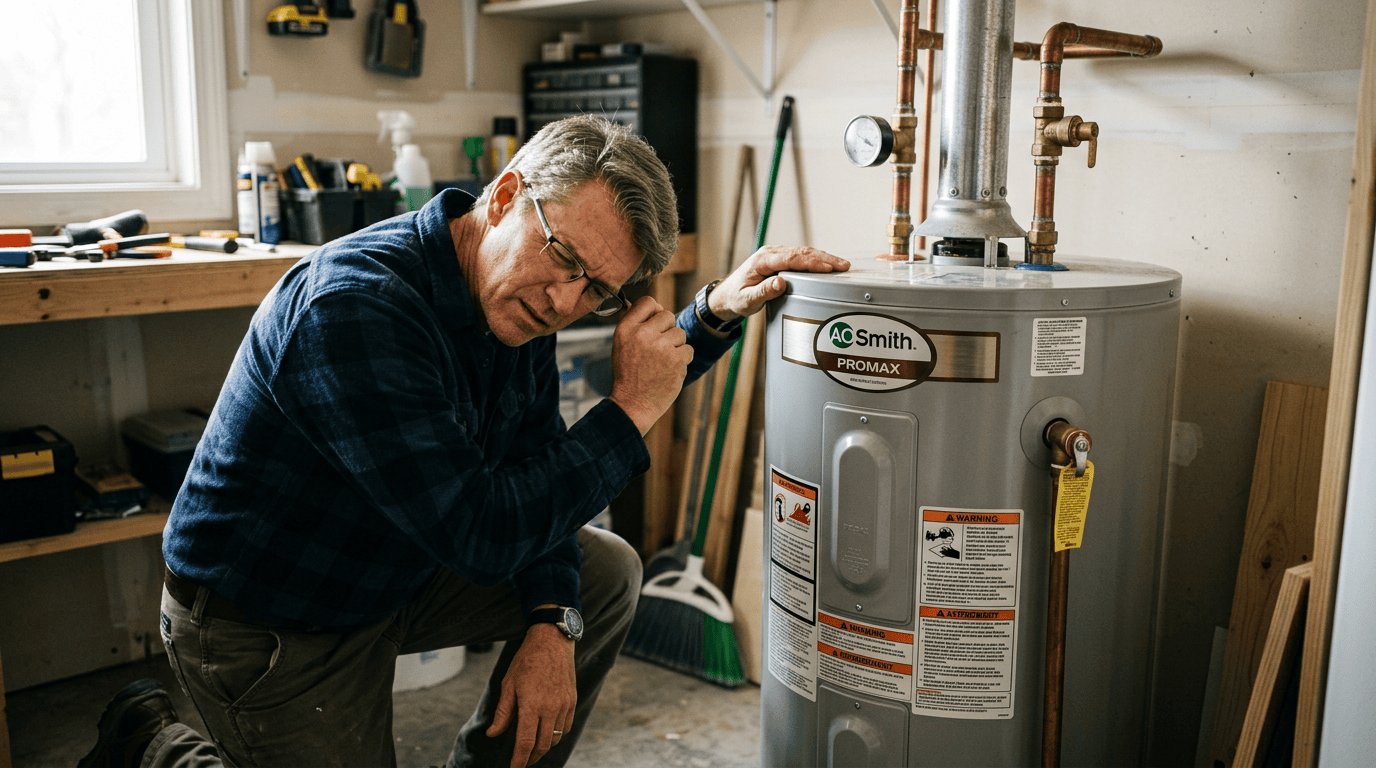
Homeowner listening closely to a residential tank water heater to check an unusual noise
Unfamiliar sounds from a water heater are often the first clue that the unit needs attention.

What Causes a Water Heater to Make Noise?

A water heater making noise usually points to one of a few common culprits: sediment settling at the bottom of the tank, mineral scale on the heating elements, loose or expanding pipes, or trapped air in the lines. Each sound tells a different story, and recognizing it early helps you act before a small issue becomes a costly failure. The most frequent cause is sediment. As water heats, dissolved minerals like calcium and magnesium separate and sink, forming a hardened layer. When water boils beneath that layer, you hear popping, rumbling, or crackling. Other times, a high-pitched whine or hissing signals scale on the elements or restricted flow, while banging or knocking often traces back to water hammer or pipes shifting against framing. Some models, such as heat pump water heaters, have a fan and compressor that naturally make some noise during normal operation. Knowing which of these applies to your unit is the first step toward a quiet, efficient system. At All About Plumbing & Septic, we often see a water heater making noise dismissed as normal until hot water disappears entirely. Our family-owned team, serving Buncombe County, Haywood County, and Henderson County, NC, has diagnosed these sounds in every type of system, from tankless models to high-efficiency options. Whether you are weighing a gas or electric system or simply want peace of mind, a licensed professional can pinpoint the source quickly. If you notice a water heater making noise that grows louder or arrives with leaks, rusty water, or inconsistent temperatures, it is worth a professional look. With 24/7 emergency availability and no overtime charges, addressing a water heater making noise sooner rather than later protects both your comfort and your wallet.

Why Does Sediment Cause Popping Sounds?

Sediment is the most common reason for a noisy tank. Over time, calcium and magnesium settle into a thick layer at the bottom of the tank, directly over the burner or lower heating element. As the burner heats this layer, trapped water pockets boil and burst, creating the popping or rumbling you hear. Beyond the noise, this buildup forces your heater to work harder, which can drive up energy costs and shorten its lifespan. Flushing the tank periodically helps prevent it.

How Should You Respond to New Noises?

The moment you notice a new or worsening sound, note when it happens: during heating cycles, when taps open, or constantly. Then check for companion warning signs like leaks, discolored water, or fluctuating temperatures. Avoid guessing at repairs on a pressurized, gas-fed appliance. Instead, document the symptoms and contact a licensed plumber who can safely test the tank, valves, and heating elements before the problem escalates.
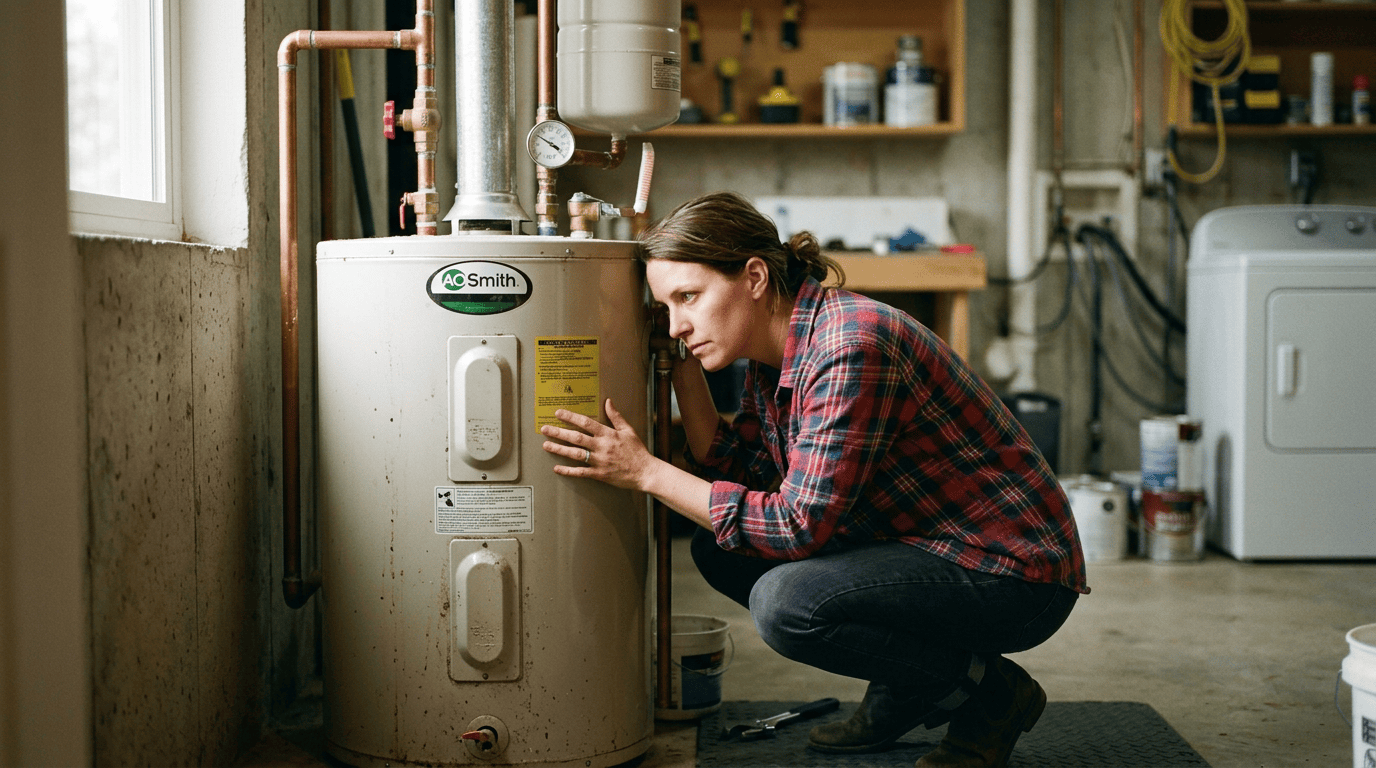
Homeowner listening to a tank water heater making noise in a home utility room
Identifying where the sound originates helps a plumber diagnose a noisy water heater quickly.
  • Popping or rumbling: sediment boiling beneath a hardened layer at the bottom of the tank
  • High-pitched whistling or hissing: mineral scale on the elements or a partially closed valve restricting flow
  • Banging or knocking: water hammer or pipes expanding and shifting against the home’s framing
  • Sizzling or crackling: condensation dripping onto a hot gas burner
  • Ticking or light tapping: routine expansion and contraction of metal pipes and fittings
  • Screeching: a nearly closed inlet valve limiting the water supply into the unit

How Does Sediment Create Water Heater Noise?

A water heater making noise usually comes down to a physical process unfolding inside the tank: as the unit heats water, minerals and loose sediment settle to the bottom, water becomes trapped beneath that layer, and escaping steam bubbles force their way through, producing the popping, rumbling, and crackling many homeowners hear. Over months and years, dissolved minerals in your water supply, calcium and magnesium in particular, precipitate out as the water warms and collect as a hardened crust across the tank floor. When the burner or lower heating element fires beneath that crust, pockets of water flash to steam and percolate upward, and each escaping bubble makes the sound you notice from another room. Generally, the more sediment that accumulates, the louder and more frequent the noise becomes.

The metal itself contributes too. As a tank cycles between hot and cold, the steel shell and internal parts expand and contract, which can create ticking or creaking. Scale that clings to an electric element acts like insulation, forcing the element to work harder and sometimes sizzle or hiss as trapped water boils against it. That same layer also separates water from the heat source, so the system can run longer and use more energy. In short, a water heater making noise is rarely random; it is the audible fingerprint of what is physically happening with heat, minerals, and metal inside the unit.

Not every system produces sound the same way. A traditional tank tells its story through sediment, while a tankless unit tends to whistle or rattle when scale narrows the heat exchanger passages. A heat pump model works differently, running at an operating sound similar to a dishwasher. For more than a decade, families across Western North Carolina have trusted our team at All About Plumbing & Septic to translate these sounds into a clear diagnosis, whether the fix is a straightforward flush or a component replacement.

Why Does Sediment Settle at the Bottom?

Sediment settles because your incoming water carries dissolved minerals and fine grit that gravity pulls toward the lowest point in the tank. As water heats, calcium and magnesium lose solubility and drop out of suspension, layering onto the floor where the heat is most intense. The hotter the setting and the harder the local water, the faster this layer builds, which is why homes on well water or mineral-rich supplies often notice buildup sooner than others.

How Can You Confirm the Sound’s Source?

To confirm the source, listen for timing and pattern. Popping or rumbling that peaks during a heating cycle points to sediment, while ticking that fades as the tank finishes heating usually signals normal metal expansion. A steady hiss can mean a scaled element. Draining a small amount of water into a bucket and checking for sandy grit is a safe first check. If the sound is loud, persistent, or paired with reduced hot water, have a licensed plumber inspect it.

Repair, Replace, or Upgrade: Which Option Fits?

Start by matching the fix to the cause: a water heater making noise from sediment usually responds to a professional flush, worn valves or high pressure call for a targeted repair, and an aging, corroding tank is often smarter to replace than to patch again. Because a water heater making noise can stem from different faults, the best alternative depends on which sound you hear. Rumbling and popping in a storage tank point to sediment, so flushing is the lowest-cost route. Whining or screeching often traces to a restricted valve or high water pressure, which a plumber can adjust without replacing the unit. Once a tank passes its service life or shows rust-colored water, replacement beats a cycle of repeated repairs. At that point, homeowners weigh three alternatives: a like-for-like storage tank, a tankless unit that heats on demand, or a heat pump hybrid electric model. If you are comparing fuel types before you buy, our guide to the pros and cons of gas water heaters lays out the tradeoffs. The family team at All About Plumbing & Septic can inspect the sound and price every option transparently.

When Is Replacement Smarter Than Repair?

Age is the deciding factor. A tank-style water heater typically lasts about 10 years, while a tankless model can reach roughly 20 years, according to the City of Portland. A noisy unit under a decade old is usually worth flushing and keeping. Once a tank passes that lifespan, corrodes, or leaks, repeated repairs rarely pay off.

How Can You Quiet a Hybrid Unit?

If you upgrade to a heat pump model, expect a soft hum from the fan and compressor, roughly 45 to 55 dBA, per ENERGY STAR. The practical step is placement and insulation: keep the unit away from rooms beside bedrooms, add sound insulation, or select a quieter certified model. Not sure where it should sit? You can reach our family team to plan the install.
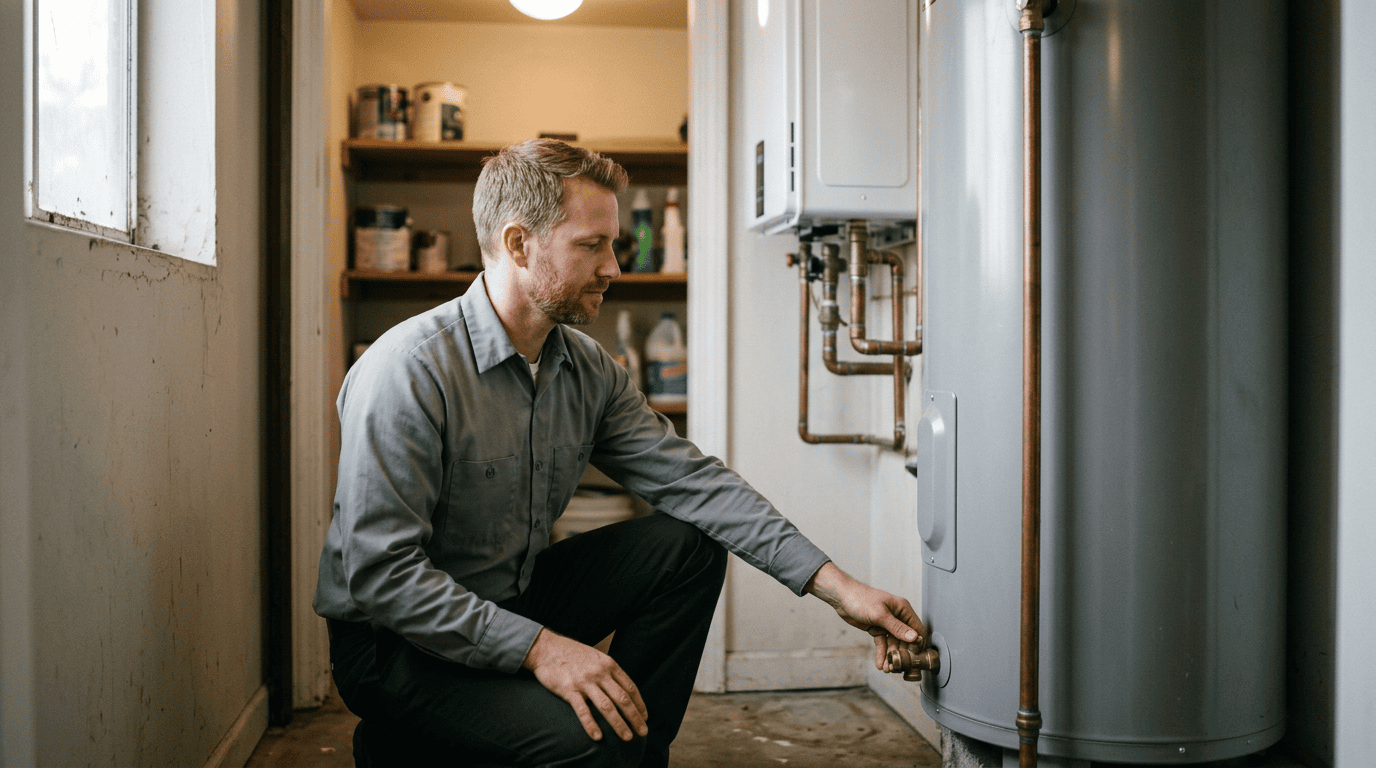
Plumber kneeling to service a storage water heater beside a wall-mounted tankless unit
Weighing repair, replacement, and upgrade options for a noisy water heater.
Match the fix to the tank’s age and fuel: flush a tank under ten years old, replace an aging or corroding one, and weigh a heat pump upgrade for electric homes.
Approach Best For Key Figure Noise & Upkeep Note
Flush or descale the existing tank Sediment rumble in a tank under ~10 years old Flush yearly; lowest-cost route Restores heat transfer and quiet operation
Replace with a tankless on-demand unit Homes wanting the longest service life ~20-year lifespan vs ~10 for tanks, Portland’s water bureau Compact; needs periodic descaling
Heat pump (hybrid) electric model Electric homes cutting energy use 70% less energy than standard electric, ENERGY STAR contractor guide Soft, dishwasher-level hum
Optimize placement and add insulation Units near bedrooms or living space Keep sound under 55 dBA, the ENERGY STAR FAQ Also yields 2-5 degrees F localized cooling

Ready to Silence That Noisy Water Heater?

A water heater making noise rarely quiets down on its own, and the real fix is a professional flush or repair, not another sleepless night. As a father-and-sons team, we handle any water heater problem with 24/7 emergency service, no overtime charges, and honest pricing well below the franchises. Schedule your repair and let our family put the quiet back in your home.

Frequently Asked Questions About Water Heater Noise

Why is my water heater making noise?

A water heater making noise is most often caused by sediment, mineral scale, and hard water deposits that settle on the bottom of the tank, where trapped steam bubbles pop and rumble as the burner or heating element warms the water. Loose pipes, high water pressure, or a failing heating element can also create knocking, ticking, or humming sounds. Identifying the specific sound helps you match it to the right repair.

Is a water heater making noise something to worry about?

A water heater making noise is rarely an emergency, but the sound is worth addressing. Popping and rumbling usually point to sediment buildup, which reduces efficiency and shortens the life of the tank. Sharp banging or hissing can signal pressure or leak problems that need prompt attention. When sounds are loud, sudden, or paired with leaking, shut the unit off and call a professional. For a free estimate, you can contact our team at All About Plumbing & Septic.

How can I stop popping or rumbling sounds from my water heater?

Flushing the tank to remove sediment is the most effective fix for popping and rumbling. Draining a few gallons every several months, confirming the temperature setting is not too high, and adding water treatment for hard water all help. Persistent noise after a flush often means a worn heating element or heavy scale that a plumber should inspect.

Why does my heat pump water heater hum?

A heat pump water heater normally produces a steady hum from its fan and compressor while it runs, which is expected during operation. That low hum is normal, and the federal ENERGY STAR program compares this sound to a running dishwasher, roughly 45 to 55 dBA, so it may be noticeable if the unit sits close to a bedroom.


How to Choose Septic Safe Toilet Paper for Your Home

If your household relies on a septic tank, choosing septic safe toilet paper is one of the simplest ways to protect your system from costly damage. Regular toilet paper can clog pipes, overload your tank, and lead to expensive repairs down the road. According to the EPA, more than one in five U.S. households depend on septic systems, so selecting the right septic safe toilet paper really does matter for millions of homeowners across the country.

Here in North Carolina, this issue hits especially close to home. About 48% of NC homes rely on septic systems, making informed choices even more important for local families.

Why Septic Safe Toilet Paper Matters

A septic tank depends on live bacteria to break down waste. Thick, heavily layered, or chemically treated toilet paper takes much longer to dissolve, allowing solids to accumulate faster than your system can process them. Over time, this leads to:

  • Slow drains and frequent clogs
  • Backups into tubs, sinks, or toilets
  • Excessive sludge buildup requiring earlier pumping
  • Drain field saturation and costly repairs

Using septic safe toilet paper keeps your system balanced and running smoothly between routine cleanings.

What Makes Toilet Paper Septic Safe?

Not every brand labeled “soft” or “premium” is safe for your tank. When shopping, look for these qualities:

  • Biodegradable: Designed to break down quickly in water
  • 1-ply or 2-ply: Thinner sheets dissolve faster than thick, plush rolls
  • Unbleached or lightly processed: Fewer chemicals protect the healthy bacteria in your tank
  • Labeled “septic safe”: Certified by the manufacturer for septic and RV use
  • Recycled content: Often breaks down faster than virgin fibers

A simple test: drop a few sheets into a jar of water, shake it, and see how quickly the paper falls apart. If it disintegrates within a few seconds, it is a great choice for your septic system.

Top Types of Septic Safe Toilet Paper to Consider

Popular options that perform well include recycled paper brands, bamboo-based rolls, and toilet tissue specifically marketed for RVs and boats. Bamboo and recycled varieties tend to be both eco friendly and gentle on your tank, which makes them a favorite among septic system owners.

What to Avoid

Some products seem convenient but can wreak havoc on your system. Steer clear of:

  • “Flushable” wipes (they rarely break down in time)
  • Ultra-plush or quilted 3-ply rolls
  • Tissues with lotion, perfume, or dyes
  • Paper towels and facial tissue flushed in place of toilet paper

Even small amounts of these materials over a few months can create a blockage that requires professional clogged drain service to resolve.

Pair Smart Choices With Routine Maintenance

Septic safe toilet paper is only part of a healthy system. Regular pumping every three to five years keeps sludge levels under control, and professional inspections catch small issues before they turn into major problems. Scheduling consistent septic tank pumping is one of the best ways to extend the life of your tank and avoid emergency expenses.

Combining good daily habits with expert care gives you peace of mind and real long-term savings for your home.

Protect Your Septic System Today

Choosing the right toilet paper is a small decision that delivers big benefits. If you have questions about your septic system or need service, the experts at All About Plumbing & Septic are here to help homeowners across Hendersonville, Asheville, and Mills River. Contact us today to schedule an inspection, pumping, or any septic service your home needs.

Tankless Water Heater | All About Plumbing & Septic

What Is a Tankless Water Heater?

Tankless Water Heater Installation: What Every Homeowner Should Know

When your hot water vanishes mid-shower, a tankless water heater installation can feel like the upgrade your home has been waiting for. Unlike a bulky storage tank, a tankless system heats water on demand, delivering a steady stream exactly when you need it. In this guide, the family team at All About Plumbing & Septic explains how these units work, why homeowners choose them, and what a careful water heater installation involves.

So what exactly is a tankless water heater installation? At its core, it means swapping a traditional storage tank for a compact unit that heats water only at the moment you turn on a tap. According to the U.S. Department of Energy, when a hot water faucet is turned on, cold water flows through a heat exchanger that a natural gas burner or an electric element heats. Why does this matter for your household? A storage tank that constantly reheats water can drive up energy use and eventually fail, often at the worst possible moment. For a household that has outgrown an aging tank, the upgrade can mean fewer cold surprises and more usable space. A properly sized tankless system frees up floor space, supports a smarter long-term plan, and can deliver steady hot water for a busy family. Pairing the right unit with skilled professional plumbing installation is what turns that promise into dependable everyday performance.

What Signs Mean It’s Time to Go Tankless?

How do you know when another repair is throwing money at a failing system? Several warning signs point toward a tankless water heater installation rather than one more patch on an aging tank. Watch for rusty or discolored hot water, water that never gets hot enough, popping or rumbling sounds, and moisture pooling near the base. Rising energy bills are another quiet clue, because the U.S. Geological Survey notes that calcium carbonate deposits can form when hard water is heated in a home water heater. At All About Plumbing & Septic, we often see homeowners across Buncombe County, Haywood County, and Henderson County, NC wait until a cold shower forces a decision. A tank that needs frequent flushing, a pilot light that will not stay lit, or a unit older than its expected lifespan are all practical triggers. When you work with our licensed team, a professional checks water quality, gas supply, and venting before recommending a tankless water heater installation that fits your household. You can read homeowner reviews from neighbors we have served, or reach our team for an honest assessment.

Why Does Hard Water Shorten Heater Life?

In much of Western North Carolina, well water carries dissolved calcium and magnesium. As that water heats, mineral scale settles on the heat exchanger and burner surfaces, so the system works harder and wears out sooner. Watch for slower flow at faucets, longer heat-up times, and a chalky film on fixtures and glassware. Pairing a tankless water heater installation with proper water treatment and routine descaling limits how quickly that scale returns and helps protect day-to-day efficiency.

For moderate hot water demand, a tankless unit generally offers a longer service life and lower energy use than a storage tank; the federal figures below compare the two.
Specification Tankless (Demand-Type) Conventional Storage Tank
Typical life expectancy More than 20 years, per the U.S. Department of Energy About 10 to 15 years
Energy efficiency for homes using 41 gallons or less per day 24% to 34% more efficient than storage tanks, per federal energy data Reference baseline
Estimated annual gas savings, ENERGY STAR certified, family of four About $95 per year, or $1,800 over its lifetime, per ENERGY STAR Standard gas storage model, reference
Efficiency rating used to compare models Uniform Energy Factor (UEF); a higher UEF is more efficient, per the DOE Energy Saver guide Uniform Energy Factor (UEF)
  • 20+ years – Typical service life of a tankless water heater, far longer than a storage tank
  • 24% to 34% – Potential efficiency gain over storage tanks for homes using 41 gallons or less per day
  • $95 per year – Estimated gas-bill savings for a family of four with an ENERGY STAR certified tankless model
  • 10 to 15 years – Typical service life of a conventional storage tank water heater

How Is a Tankless Water Heater Installed?

What actually happens during a tankless water heater installation? The work follows a deliberate sequence, not a simple swap. A qualified professional first evaluates the home, reviewing the existing gas supply, electrical capacity, incoming water lines, and a suitable, accessible mounting location. Because a tankless unit draws substantially more natural gas than a standard storage tank water heater, the existing gas line may not be sized for the added demand and may need to be upsized, a point noted in permit guidance for water heater work. From there, venting and fresh combustion air are routed, water and gas connections are made to code, and the unit is mounted and sealed. At All About Plumbing & Septic, our licensed technicians complete each stage in order, then test the system under live conditions before leaving. Why does sequence matter so much? Skipping a step can compromise safety, so many homeowners schedule a professional assessment instead.

  1. Site evaluation and sizing: A technician inspects the gas supply, electrical service, water lines, and venting path to confirm the home can support a tankless water heater installation.
  2. Permitting and prep work: Required permits are pulled, utilities are shut off safely, and any old storage tank unit is drained and removed.
  3. Gas and electrical readiness: The gas line is upsized when the unit’s fuel demand calls for it, and any dedicated electrical circuit is added.
  4. Mounting the unit: The heater is secured to a wall in an accessible, code-compliant spot that leaves clearance for future service.
  5. Venting and combustion air: Manufacturer-specified venting and a fresh-air intake are installed to move exhaust safely outside.
  6. Connections and valves: Cold and hot water lines and the gas supply are connected, with isolation valves added for easier maintenance.
  7. Testing and commissioning: The system is pressure-checked for leaks, the temperature is set, and hot water delivery is verified before the work is signed off.

Ready to Go Tankless With Confidence?

As a family-owned team serving Western North Carolina, we make your tankless water heater installation honest, affordable, and done right the first time. When you are ready for dependable hot water, get in touch with us for a free, no-pressure estimate. Let our father-and-sons crew put proven experience to work in your home.

Frequently Asked Questions

How long does a tankless water heater installation take?

Most homeowners find that a straightforward tankless water heater installation can be completed within a single day, though the timeline may vary depending on your existing plumbing. Projects that involve new gas lines, upgraded venting, or added electrical work generally take longer. A licensed plumber can give you a clearer estimate after assessing your home.

Will a tankless water heater keep up with my household’s hot water demand?

When the unit is sized correctly for your home, it should keep pace with everyday use. According to Department of Energy guidance, a tankless unit is designed to provide an adequate supply of hot water without running out when it is properly sized. Because demand rises when several fixtures run at once, an accurate load calculation matters.

How much does a tankless water heater installation cost?

Costs can range widely and depend on factors such as fuel type, venting requirements, and whether your home needs gas or electrical upgrades. Because every house is different, the most reliable way to budget is to request an on-site evaluation rather than relying on a generic price. Many homeowners weigh what they invest upfront against the long-term value they hope to gain from going tankless.

Do tankless water heaters need regular maintenance?

Yes, periodic maintenance helps protect your investment. In areas with hard water, mineral buildup can collect inside the heat exchanger, so many manufacturers generally recommend flushing the system on a regular basis. Scheduling routine service with a licensed plumber helps the unit keep running efficiently.

Should I hire a professional, or can I install a tankless unit myself?

Tankless systems involve gas, venting, and electrical connections that generally require permits and code compliance, so professional installation is strongly recommended. The team at All About Plumbing & Septic can evaluate your home, handle the technical details safely, and confirm the work meets local requirements. When you are ready to move forward, you can request a free estimate online.


Commercial Water Heater Repair: Keeping Your Operations Running Smoothly

Hot water is the silent workhorse of nearly every business. Restaurants, hotels, salons, medical offices, and manufacturing facilities all depend on it to keep operations humming. When the system fails, productivity grinds to a halt and customers notice right away. That is why prompt commercial water heater repair is not just a convenience but a core part of protecting your bottom line. At All About Plumbing & Septic, we help Western North Carolina businesses stay up and running, no matter the size of the job.

Why Commercial Water Heater Repair Matters More Than You Think

A water heater failure in a commercial setting is not the same as one in a home. A single day without reliable hot water can cost a restaurant thousands in lost revenue, force a hotel to comp rooms, or shut down a dental practice entirely. According to ENERGY STAR, if all commercial water heaters sold in the U.S. were ENERGY STAR certified, energy cost savings would grow to nearly $890 million annually. Keeping your unit in good shape is both a financial and operational win.

Common Signs Your System Needs Attention

Most commercial water heater issues build gradually. Watch for these warning signs:

  • Water that takes longer than usual to heat up
  • Inconsistent temperatures during peak hours
  • Rust colored water at the tap
  • Rumbling, popping, or banging noises from the tank
  • Visible leaks or pooling water around the base
  • A sudden jump in your monthly utility bill

Catching these early often means a simple fix rather than a full replacement.

The Cost of Waiting

Ignoring small problems is the fastest route to a much larger expense. A minor heating element failure can snowball into a ruptured tank, water damage, and days of closure. Scheduling commercial water heater repair at the first sign of trouble protects your equipment, your property, and your reputation.

What a Quality Commercial Water Heater Repair Looks Like

Our technicians follow a careful process for every job:

  • Full diagnostic of thermostats, heating elements, valves, and connections
  • Inspection for sediment buildup and corrosion inside the tank
  • Pressure and temperature checks to confirm safe operation
  • Repair or replacement of failed components using code compliant parts
  • A walk through with you so you understand what was done and why

We service gas, electric, tankless, and heat pump systems for businesses across the region. You can learn more about our full range of water heater services on our website.

Keeping Your Business Protected with Preventive Care

The best commercial water heater repair is the one you never need. Regular maintenance, including annual flushing, anode rod checks, and thermostat calibration, can extend the life of your unit by years. Pairing that with the broader support of a trusted commercial plumbing partner means fewer emergencies and lower lifetime costs.

A few habits go a long way:

  • Schedule annual professional inspections
  • Keep a log of repairs and replacement dates
  • Train staff to report unusual sounds, smells, or temperature shifts immediately
  • Flush sediment from tanks at recommended intervals

Schedule Your Commercial Water Heater Repair Today

When your business depends on hot water, you cannot afford to wait. Our licensed team serves Asheville, Hendersonville, Mills River, and the surrounding communities with fast response times, transparent pricing, and workmanship backed by thousands of five star reviews. Whether you need an urgent fix or want to set up an ongoing maintenance plan, we are ready to help. Reach out through our contact page to keep your operations running smoothly.

Video Pipe Inspection: The Best Way to Diagnose Plumbing Issues

When something goes wrong with your plumbing and the problem is hidden inside your walls or buried underground, guessing is not a strategy. A professional pipe inspection using video camera technology is the most accurate, least invasive way to see exactly what is happening inside your pipes before any work begins. Whether you are dealing with recurring clogs, slow drains, or unexplained odors, a camera inspection removes the uncertainty and points directly to the source of the problem.

How Video Pipe Inspection Works

The camera used for this service is a flexible rod with a high-resolution lens attached to the end. A technician feeds the rod into the pipe through an access point such as a cleanout, drain opening, or toilet. As the camera moves through the line, it transmits a live video feed to a monitor that the technician can review in real time.

The footage captures everything inside the pipe including:

  • Cracks, fractures, or collapsed sections
  • Root intrusion from nearby trees
  • Buildup from grease, mineral deposits, or debris
  • Offset joints where sections of pipe have shifted out of alignment
  • Corrosion or deterioration in older pipe materials

Because the camera records the footage, the technician can review it with you, mark the exact location of any problems, and explain what repair options are appropriate.

When Should You Schedule a Pipe Inspection?

Many homeowners only think about this service when something has already gone wrong. But there are several situations where scheduling one proactively is the smarter move:

  • Before purchasing a home, to assess the condition of the existing sewer and drain lines
  • After a significant clog that has been cleared, to confirm the blockage is fully resolved
  • When recurring backups keep happening despite repeated clearing attempts
  • After tree removal or landscaping work that may have disturbed underground lines
  • When a home has older clay, cast iron, or Orangeburg pipe that may be deteriorating

A pre-purchase inspection is one of the most valuable investments a buyer can make. It can uncover thousands of dollars in needed repairs before closing and give the buyer leverage to negotiate or walk away.

Why It Beats Traditional Diagnosis Methods

Before this technology became widely available, diagnosing hidden plumbing problems often meant exploratory digging or tearing into walls. That approach was expensive, disruptive, and not always accurate.

According to the American Society of Home Inspectors, sewer and drain issues are among the most commonly missed defects during standard home inspections, precisely because traditional visual inspections cannot see what is happening inside the lines.

Video camera pipe inspection eliminates that blind spot entirely. A trained technician can identify the exact nature and location of a problem in a fraction of the time that traditional methods required, and without any unnecessary damage to your property.

What Comes After the Inspection

Once the inspection is complete and the footage has been reviewed, your plumber can recommend the most appropriate repair. Depending on what the camera finds, solutions may range from a simple hydro jetting service to remove buildup, all the way to a trenchless sewer repair that fixes damaged sections with minimal excavation.

Our plumbing inspection service covers all of this from camera assessment to a clear repair recommendation so you always know what you are dealing with before any work begins.

For homes where the inspection reveals significant line deterioration, our sewer line repair and replacement services offer efficient, lasting solutions for pipes that have reached the end of their useful life.

Schedule Your Pipe Inspection With All About Plumbing

A pipe inspection moves you from guessing to knowing. If you have been dealing with recurring plumbing issues or want to understand the condition of your home’s lines, our experienced team is ready to help.

Contact us today to schedule your video pipe inspection in Hendersonville, Asheville, Mills River, or the surrounding Western North Carolina area.

How to Tell If Septic Tank Is Full or Clogged and What to Do Next

If you are noticing slow drains, gurgling pipes, or unpleasant odors near your yard, you may already be wondering how to tell if septic tank is full or clogged. These two issues share similar symptoms but have different causes and require different responses. Knowing the difference can help you act before a manageable problem becomes a costly one.

Signs Your Septic Tank May Be Full: How to Tell If Septic Tank Is Full or Clogged

A full septic tank means the solids and sludge inside have built up to a point where there is no room for new wastewater to enter and process properly. Over time, every septic tank reaches this point, which is why routine pumping is essential.

Common signs that your tank is full include:

  • Slow draining in multiple fixtures throughout the home, not just one
  • Gurgling sounds coming from toilets or drains
  • A sewage smell inside the house or near the tank access point in the yard
  • Unusually lush, green patches of grass directly over the drain field
  • Sewage backup in the lowest drains of the home, such as basement toilets or floor drains

If several of these signs appear together, a full tank is likely the culprit and scheduling a pump-out should be your first call.

Signs Your Septic Tank May Be Clogged

Knowing how to tell if septic tank is full or clogged also means understanding when a clog rather than a capacity issue is at play. Clogs can occur in the inlet baffle, outlet baffle, or the line connecting the house to the tank. They can also develop in the drain field if solids have been passing through for too long.

Signs that point more specifically to a clog include:

  • Only one fixture backing up while others drain normally
  • Slow drains that appeared suddenly rather than gradually over time
  • Standing water near the tank or drain field without a recent heavy rain
  • A backup that worsens with water use from a specific appliance

A clog in the inlet or outlet baffle is more urgent because it can cause raw sewage to back up into the home quickly.

How Often Should You Have Your Tank Pumped?

According to the United States Environmental Protection Agency, the average household septic tank should be pumped every three to five years depending on household size and usage. Many homeowners delay this service until a problem develops, which typically makes the situation more expensive to resolve.

Keeping a consistent pumping schedule is the single most effective way to prevent both full tank situations and the secondary clogs that result from them.

What to Do Next

If you suspect your tank is full or clogged, reduce water use in the home immediately to avoid worsening a potential backup. Do not run laundry, dishwashers, or multiple fixtures at the same time until the system has been inspected.

Then, call a professional. A septic technician can inspect the tank, determine whether the issue is capacity or a blockage, and recommend the appropriate service.

Our septic tank pumping service is designed to handle this efficiently, clearing the tank and inspecting the system at the same time to make sure nothing is missed.

For homes with recurring issues, our septic tank cleaning service goes a step further by removing all residual sludge and buildup that standard pumping may leave behind.

Call All About Plumbing and Septic Today

Learning how to tell if septic tank is full or clogged is the first step. Calling a qualified team to address it is the second. All About Plumbing and Septic serves Hendersonville, Asheville, Mills River, and the surrounding Western North Carolina region with fast, reliable septic service.

Contact us today to schedule an inspection or pump-out before a small issue becomes a major repair.

Drain Inspection: How Camera Technology Finds Hidden Problems

When plumbing problems strike, the source of the issue is not always obvious. Slow drains, strange odors, and recurring backups often point to problems deep within your pipes that you cannot see from above ground. A professional drain inspection using advanced camera technology takes the guesswork out of diagnosing these hidden issues, helping you avoid costly surprises and unnecessary repairs.

What Is a Camera Pipe Inspection?

This process involves inserting a small, waterproof camera attached to a flexible cable into your pipes. As the camera travels through your plumbing system, it transmits real-time video footage to a monitor, allowing technicians to see exactly what is happening inside your drains and sewer lines.

This technology can navigate through twists, turns, and narrow sections of pipe, capturing high-resolution images of blockages, damage, and other concerns. The process is completely non-invasive, meaning there is no need to dig up your yard or tear into walls to diagnose the problem.

Common Problems Detected by Camera Technology

Camera technology reveals issues that would otherwise remain hidden until they cause major damage. Some of the most common problems identified include:

  • Tree root intrusion: Roots naturally seek water sources and can penetrate small cracks in pipes, eventually creating significant blockages.
  • Cracks and fractures: Aging pipes develop cracks from ground shifting, temperature changes, or normal wear over time.
  • Grease and debris buildup: Cooking oils, soap residue, and other materials accumulate on pipe walls, narrowing the passage and causing slow drains.
  • Pipe corrosion: Older metal pipes can rust and deteriorate from the inside, leading to leaks and reduced water flow.
  • Misaligned or collapsed sections: Ground movement can cause pipes to shift, sag, or even collapse completely.

According to Redfin, repairing or replacing a damaged sewer line can cost between $2,500 and $30,000. This technology helps you catch these problems early when repairs are still manageable.

Benefits of Camera Inspections

Accurate Diagnosis

Rather than relying on guesswork, camera inspections pinpoint the exact location and nature of plumbing problems. This precision ensures that repairs target the actual issue, saving you time and money on unnecessary work.

Cost Savings

Traditional diagnostic methods often required extensive digging to locate problems. With camera technology, plumbers can identify issues without excavation, reducing labor costs and preventing damage to your landscaping, driveway, or foundation.

Preventive Maintenance

Even if you are not experiencing obvious problems, a routine drain inspection can detect minor issues before they escalate into emergencies. Catching a small crack or early root intrusion now is far less expensive than dealing with a complete sewer line repair later.

Peace of Mind for Home Buyers

If you are purchasing a home, scheduling an inspection before closing can reveal hidden problems that might not appear during a standard home inspection. This knowledge gives you negotiating power and protects you from inheriting expensive plumbing repairs.

When Should You Schedule a Drain Inspection?

Consider scheduling an inspection if you notice any of the following warning signs:

  • Multiple slow drains throughout your home
  • Recurring clogs that keep coming back
  • Unpleasant sewage odors near drains or in your yard
  • Gurgling sounds from toilets or drains
  • Unexplained patches of lush grass in your yard
  • Water backing up into sinks, tubs, or toilets

Regular inspections are also recommended for older homes, properties with mature trees near sewer lines, and as part of routine plumbing maintenance.

Get a Professional Drain Inspection Today

Do not wait for a small plumbing issue to become a major emergency. A professional drain inspection gives you clear answers about the condition of your pipes and helps you plan for necessary repairs before problems worsen.

Contact All About Plumbing today to schedule your inspection. Our experienced technicians serve Hendersonville, Asheville, Mills River, and surrounding communities with honest assessments and reliable service.

Trenchless Pipe Replacement: Save Your Yard and Your Money

When your sewer line needs repair, you have more options than ever before. Trenchless pipe replacement has become a popular choice for homeowners who want to minimize disruption to their property. This innovative method allows plumbers to repair or replace damaged pipes with minimal digging, offering a convenient alternative that can save time and preserve your landscaping.

What Is Trenchless Pipe Replacement?

Trenchless pipe replacement is a method of repairing or replacing underground pipes without excavating large trenches across your property. Instead of extensive digging, technicians access the damaged pipe through small entry points at each end of the line.

Two primary techniques make this possible:

  • Pipe Bursting: A specialized head breaks apart the old pipe while simultaneously pulling a new pipe into place behind it.
  • Pipe Lining (CIPP): A resin-coated flexible liner is inserted into the existing pipe, then cured to create a seamless new pipe within the old one.

Both methods deliver long-lasting results while keeping your yard largely intact.

Benefits of Trenchless Pipe Replacement

One of the biggest advantages of trenchless methods is property preservation. If you have mature landscaping, a decorative driveway, or hardscaping features you want to protect, trenchless technology allows repairs with minimal surface disruption.

According to Angi, sewer pipe liners are rated to last up to 50 years, making trenchless methods a smart long-term investment. The process typically requires only one or two small access holes, leaving most of your lawn, flower beds, and outdoor features untouched.

Additional benefits include:

  • Minimal landscaping disturbance
  • Faster completion times in many cases
  • Less cleanup required after the job
  • Preserved driveways and walkways

Choosing the Right Approach for Your Home

Every sewer line situation is unique, and the best repair method depends on several factors. A professional inspection using camera technology helps determine which approach will deliver the best results for your specific circumstances.

Trenchless pipe replacement works well for:

  • Cracked or deteriorating pipes
  • Root intrusion damage
  • Pipes located under patios, decks, or landscaping
  • Lines where surface preservation is a priority

In some cases, traditional sewer line replacement may be the better choice. Severely collapsed pipes, lines with multiple sharp bends, or situations requiring significant rerouting often benefit from conventional excavation methods. Traditional replacement also allows for a complete visual inspection of the surrounding soil and infrastructure.

Long-Lasting Results You Can Count On

Modern trenchless materials are engineered for durability. New pipe liners can last 50 years or more, providing a permanent solution to your sewer problems. The seamless interior created by pipe lining resists root intrusion and corrosion, two common causes of future sewer line issues.

Whether you choose trenchless or traditional methods, working with experienced professionals ensures your repair is done correctly the first time. Quality workmanship matters regardless of the technique used.

Let the Experts Help You Decide

Not sure which option is right for your home? That is where professional guidance makes all the difference. A trenchless sewer repair specialist can evaluate your situation, explain your options, and recommend the approach that best fits your needs and budget.

Contact All About Plumbing today to schedule a camera inspection. Our experienced team serves Hendersonville, Asheville, Mills River, and surrounding communities, and we offer both trenchless and traditional solutions to address any sewer line problem.

What to Do When You’re Yelling “Washer Drain Clogged!”

Few household emergencies are as frustrating as discovering a washer drain clogged right in the middle of laundry day. Water pooling around your washing machine creates a mess and brings your cleaning routine to a halt. Understanding why this happens and how to address it can save you time, money, and stress.

Common Causes of Washer Drain Clogged

Your washing machine’s drainage system handles gallons of water with each load. When you notice a washer drain clogged, several culprits could be responsible:

  • Lint and fabric fibers accumulating in the drain pipe
  • Small items like socks or coins blocking the system
  • Soap residue and detergent buildup creating sticky deposits
  • Crushed or kinked drain hoses restricting water flow
  • Tree roots infiltrating outdoor drain lines

According to the American Society of Home Inspectors, drainage problems account for approximately 44% of all plumbing issues reported in homes. Regular maintenance can prevent most of these problems from occurring.

Immediate Steps When Washer Drain Clogged

When you discover standing water around your washing machine, act quickly to minimize damage:

Stop the cycle immediately and turn off the water supply to prevent flooding. Unplug the machine for safety. Use towels to soak up standing water and protect your flooring from water damage.

Check the drain hose for obvious kinks or clogs. Sometimes, a washer drain clogged situation resolves with a simple straightening of the hose. Remove the hose and inspect it for blockages you can clear manually.

DIY Solutions to Try First

Before calling a professional, you can attempt these solutions:

Pour hot water down the drain to dissolve soap buildup. For stubborn clogs, try a mixture of baking soda and vinegar. Let it sit for 30 minutes before flushing with hot water.

Use a plumbing snake to reach deeper clogs in the standpipe. Insert the snake carefully and rotate it to break up or retrieve blockages. If your home has other drainage issues, you might be dealing with a larger problem in your main line.

When to Call Professional Help

Some washer drain clogged scenarios require professional expertise. If you’ve tried basic solutions without success, continuing could damage your plumbing system.

Professional plumbers have specialized equipment like hydro-jetting machines and video inspection cameras. These tools identify exactly where the clog exists and clear it completely without damaging pipes.

Recurring clogs indicate a deeper issue in your plumbing system. Tree root infiltration, corroded pipes, or improper venting all require professional diagnosis and repair. Similar to complex water heater repairs, drainage problems often need expert attention.

Preventing Future Clogs

Prevention is always easier than repair. Install a lint trap on your washing machine’s discharge hose to catch fibers before they enter your drain system. These inexpensive devices capture lint that would otherwise accumulate in pipes.

Use the appropriate amount of detergent. Excess soap creates residue that contributes to clogs. Choose high-efficiency detergent if you have an HE washer.

Schedule annual plumbing inspections to catch potential problems early. Professional maintenance identifies issues before they become emergencies.

Get Expert Help Today

Don’t let a washer drain clogged problem disrupt your household routine or cause water damage to your home. Our experienced plumbers diagnose and resolve drainage issues quickly and effectively.

We offer comprehensive solutions for all your plumbing needs, from simple clogs to complex system repairs. Contact us today to schedule service and get your washing machine draining properly again. We’re available for emergency calls and routine maintenance to keep your plumbing system running smoothly.

Schedule Service

"*" indicates required fields

This field is for validation purposes and should be left unchanged.
Select Service*
By clicking “Send Message”, I am providing express written consent to receive autodialed and pre-recorded calls, texts, and SMS/MMS with marketing communications from All About Plumbing regarding home services at the phone number provided above, even if the number is on a corporate, state, or national Do Not Call list. Consent is not a condition to purchase services or products.